
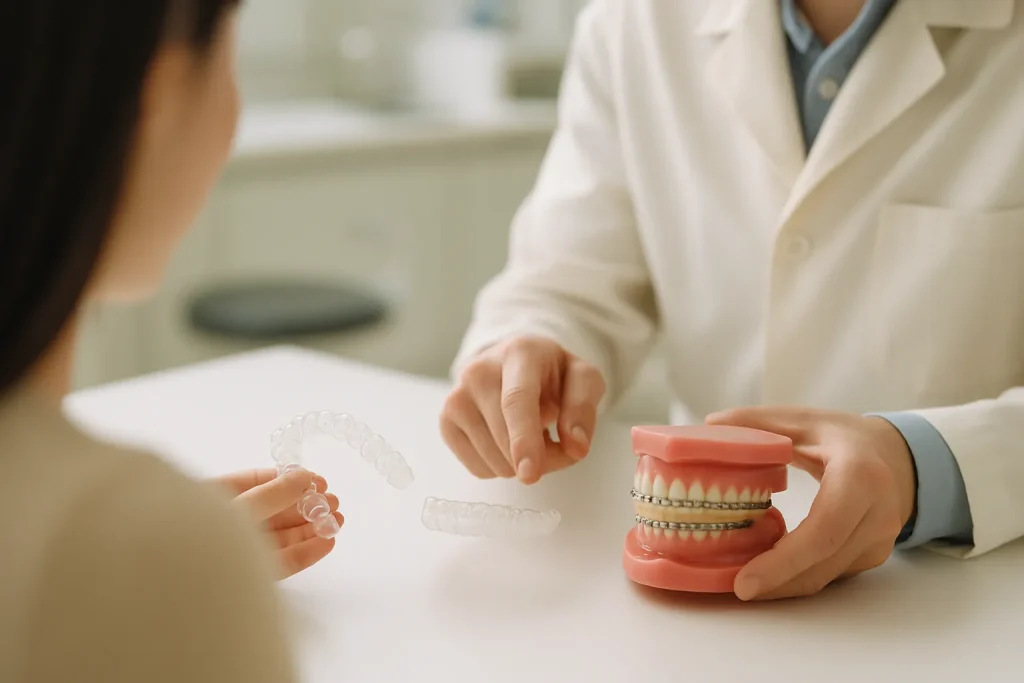
Clear aligners may help with some complex orthodontic problems, but current research shows that traditional braces are usually more effective for severe crowding, major bite issues, and significant jaw alignment problems. Complex cases often involve severe crowding (when teeth overlap or are out of place), large bite discrepancies (such as overbite or underbite), jaw misalignment, rotated teeth, or impacted teeth (teeth that have not emerged properly). These situations are more challenging to correct and often require precise and predictable tooth movements.
This article will explain exactly what counts as a ‘complex’ orthodontic case and why not all treatments are equally suited for every type of problem. You will also find clear criteria for when braces are typically recommended over clear aligners, based on the latest scientific evidence and expert guidelines.
What Makes an Orthodontic Case ‘Complex’?
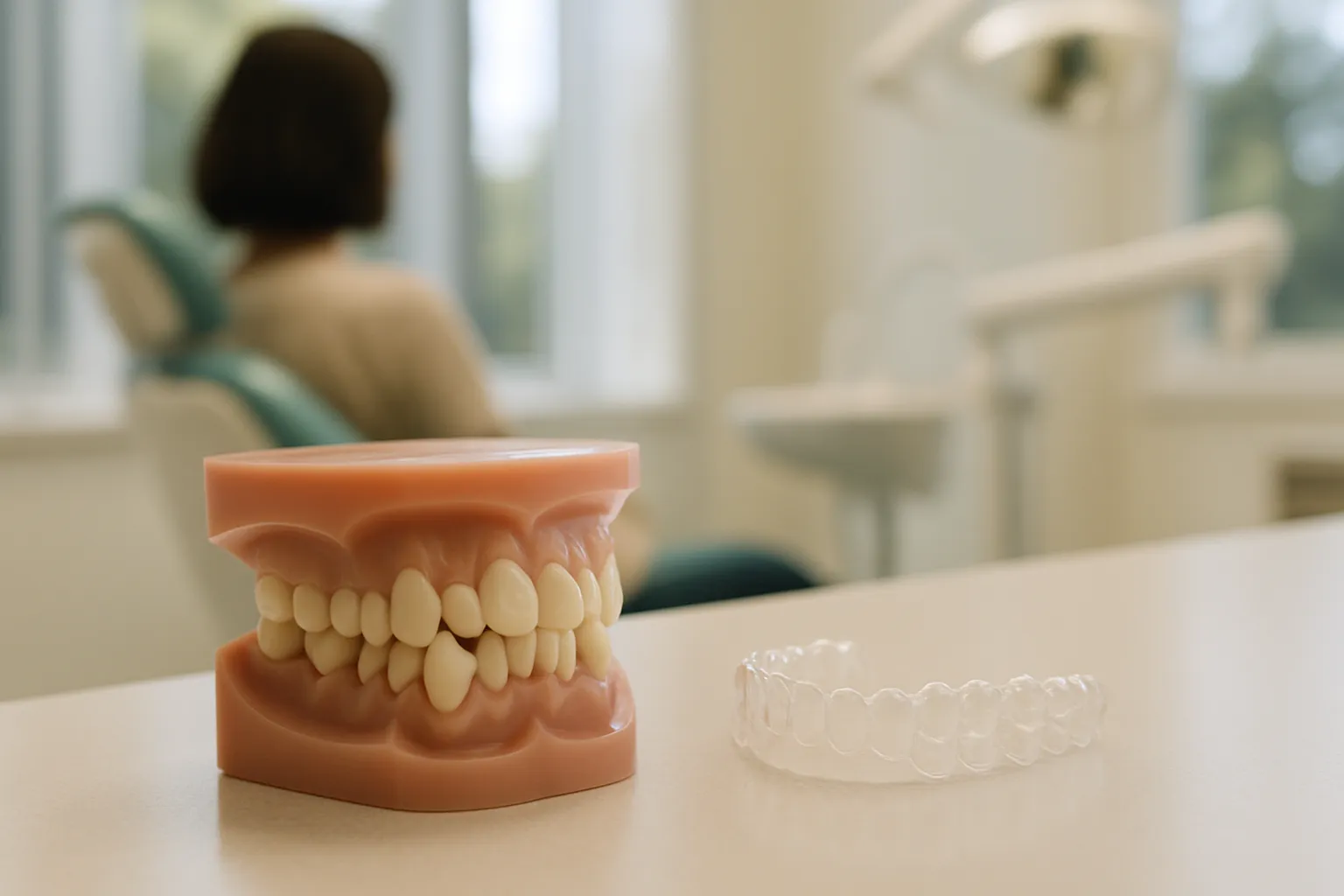
A ‘complex’ orthodontic case usually means there are more difficult problems to solve with the teeth or jaws. This can include severe crowding (when teeth overlap or are very close together), large bite problems such as an overbite (upper teeth stick out) or underbite (lower teeth stick out), jaw misalignment, teeth that are rotated or twisted, and impacted teeth (teeth stuck under the gum or bone). These situations are more challenging because they often need bigger changes in tooth or jaw position, and sometimes require moving teeth in several directions at once or correcting the way the jaws fit together.
Because these problems are more complicated, not every treatment method is equally effective. Some treatments, like traditional braces, can handle a wider range of movements and more difficult cases. Others, such as clear aligners, may have limitations when it comes to severe or complex issues.
How Do Clear Aligners Work—and What Are Their Limits?
Clear aligners are removable, transparent trays made of plastic that fit closely over your teeth. They are custom-made for each patient and are changed every one to two weeks to gradually move teeth into the desired position. Each new set of aligners applies gentle pressure, shifting teeth step by step.
Studies show that clear aligners can be effective for mild to moderate orthodontic problems, such as minor crowding or spacing. However, research suggests that certain types of tooth movements—especially rotating teeth or moving them up and down (vertical changes)—are less predictable with aligners than with traditional braces (S4, S5, S6, W6, W10). For aligners to work well, it is essential for patients to wear them 20–22 hours each day; not wearing them as directed can reduce their effectiveness (W5).
Braces: The Traditional Choice for Complex Cases
Fixed braces use small brackets attached to each tooth, connected by a metal wire. The wire is regularly adjusted by your dentist to gradually move teeth into better positions. Braces are especially effective for complex orthodontic problems, such as severe crowding, large bite issues, jaw misalignment, and teeth that need to be rotated or moved vertically. Studies show that braces are more reliable for these complicated movements compared to clear aligners (S3, S7, S8). Unlike removable aligners, braces work continuously—they do not depend on you remembering to wear them. For some complex cases, extra devices like elastics (small rubber bands) or expanders (devices to widen the jaw) may be added to help correct the bite or jaw position. This combination gives orthodontists strong control over difficult tooth and jaw movements.
What Does the Research Say? Effectiveness of Aligners vs Braces in Complex Cases
Recent research shows that clear aligners can sometimes be used for complex orthodontic problems, but their effectiveness depends on the type and severity of the case. Studies suggest that aligners may help in selected complex situations, especially when used together with braces or with very careful planning (S1, S8). However, for severe crowding, large bite corrections, or significant jaw alignment issues, traditional braces consistently achieve more reliable results (S3, W3). Braces are better at moving teeth in complicated ways, such as rotating teeth or correcting vertical discrepancies (S8, W3). Most research also notes that certain problems—like impacted teeth (teeth stuck in the jaw) or major jaw size differences—are usually not suitable for aligners alone and may need braces or even surgery (S1, S8). In summary, while aligners have expanded their use, braces are generally preferred for the most challenging cases.
Comparison Table: Aligners vs Braces for Complex Problems
Choosing between clear aligners and traditional braces depends on the type and severity of your orthodontic problem. The table below compares these options across key criteria, with a focus on complex cases like severe crowding, jaw correction, and impacted teeth.
| Criteria | Clear Aligners | Braces |
|---|---|---|
| Types of Tooth Movements | Effective for mild-to-moderate; less predictable for severe rotations or vertical changes | Effective for all types, including severe rotations and vertical movements |
| Predictability | Lower for complex movements; depends on patient compliance | High, especially for complex cases |
| Patient Compliance | Essential (must wear 20-22 hours/day) | Not required; braces are fixed in place |
| Comfort | Smoother, removable; fewer mouth sores | Can cause irritation from brackets and wires |
| Aesthetics | Nearly invisible | Visible metal or ceramic brackets |
| Severe Crowding | Limited effectiveness; may need extractions or combined treatment | More effective and predictable |
| Jaw Correction | Limited; may help mild discrepancies in selected adults | Suitable for most jaw corrections (with additional devices if needed) |
| Impacted Teeth | Not recommended as sole treatment | Standard approach; can guide impacted teeth into place |
| Suitability for Complex Cases | May be possible in specific situations with careful planning | Preferred and more reliable for complex cases |
For complex orthodontic issues, braces are generally the more predictable and effective choice, though aligners may be considered in selected situations with specialist guidance.
Which Adults Might Be Suitable for Aligners in Complex Cases?
Clear aligners may be considered for some adults with complex dental problems, but only in specific situations. For example, aligners might be suitable if you have moderate crowding, a mild jaw discrepancy, or if you are highly motivated to wear the aligners as directed (usually 20–22 hours per day). In some complex cases, dentists may recommend using aligners together with braces for different stages of treatment, especially to address severe crowding or impacted teeth (S1).
However, clear aligners are usually not recommended if you have very large jaw discrepancies, require significant tooth movement (such as moving back teeth forward), or have teeth with short crowns (the visible part of the tooth) (W2). If you find it difficult to wear aligners consistently, they may not be the right choice for you (S4).
Because these decisions are complex, a specialist orthodontic assessment is essential. A professional can evaluate your teeth and jaws and help you choose the safest, most effective option for your needs.
Practical Steps: How to Choose the Right Treatment for You
Choosing between clear aligners and braces starts with a full dental and orthodontic assessment. This usually includes dental X-rays, photos, and a careful look at how your teeth and jaws fit together. Your dentist or orthodontist will talk with you about your main goals—whether you care most about appearance, comfort, or treatment speed. They will also review how complex your case is and explain which options are likely to work best for your needs.
If your case is complicated (such as severe crowding or jaw problems), your dentist may refer you to a specialist orthodontist for a more detailed plan. Online or in-person consultations can help answer your questions and give you a clearer idea of your options. For more details on orthodontic treatments, you can read our comprehensive orthodontic treatment guide.
Conclusion
Clear aligners can be an option for some complex orthodontic cases—especially when treatment is carefully planned and the patient is highly motivated. However, braces remain the standard approach for severe crowding, large bite problems, significant jaw misalignment, and cases involving impacted teeth. Most evidence shows that braces are more predictable and effective for these challenging situations.
- If you have a complex dental problem, start with a full orthodontic assessment.
- Discuss your goals and daily habits with your dentist or orthodontist.
- Ask if aligners alone are suitable, or if a combined approach (aligners plus braces) is needed.
- If your case is very complex, expect that braces may be recommended.
- Remember: your treatment should be personalised to your needs and preferences.
Choosing the right orthodontic option is a big decision. A specialist evaluation—online or in person—can help you understand your choices and what will work best for your unique situation.
Frequently Asked Questions
Can clear aligners fix severe crowding?
Clear aligners may help some cases of crowding, but severe cases often need braces for more predictable results.
Are clear aligners effective for bite and jaw problems?
Aligners can help with some mild bite issues, but jaw alignment problems usually require braces or other treatments.
Why do some dentists not recommend aligners for complicated cases?
Some tooth movements and jaw corrections are more predictable with braces, especially in complex situations.
Can adults with complex orthodontic needs use aligners?
Some adults may use aligners for complex cases, but a specialist assessment is needed to see if it’s suitable.
References
- Management of complex orthodontic cases using aligners: A comparative study (2026)
- Assessing the Effectiveness of Clear Aligners Compared to Traditional Braces in Adult Orthodontics (2026)
- Comparing the Effectiveness of Clear Aligners with Other Orthodontic Methods-A Systematic Review (2025)
Last updated: 2026-10-14
Dentist, Iran Medical Council No. 233463 · Last reviewed: 14 October 2026
This article is for general education and does not replace a dental examination or diagnosis. For advice about your own teeth, book an in-person or online visit.